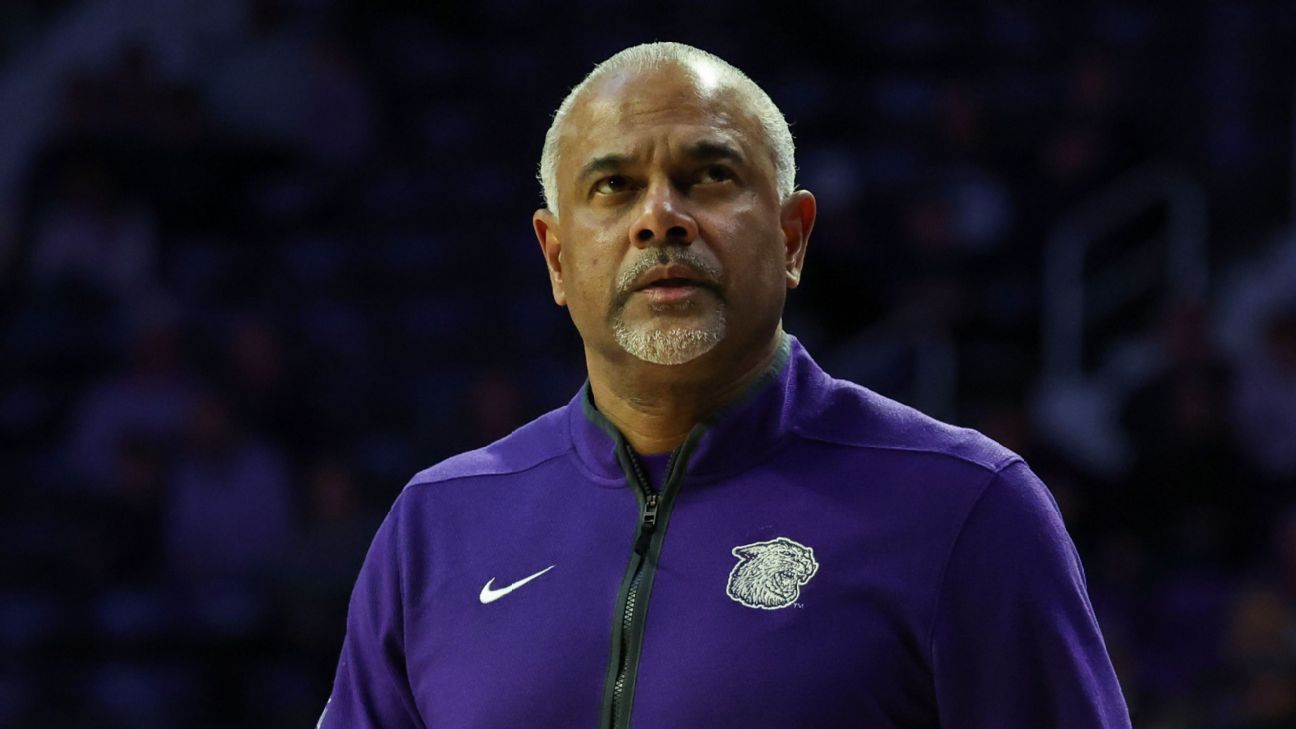
The High Stakes of Tang's Firing: K-State's Bold Move to Sidestep an $18.7 Million Buyout
The world of college athletics is no stranger to dramatic coaching changes, but the recent firing of Jerome Tang from Kansas State University has injected a new level of complexity and controversy into the mix. At the heart of the matter lies a staggering $18.7 million buyout, which Kansas State is reportedly attempting to avoid by characterizing Tang's termination as "for cause." This bold strategic play hinges not on allegations of NCAA violations or player mistreatment, but on the coach's post-game comments following a particularly devastating loss. The outcome of this legal and financial showdown could set a significant precedent for coaching contracts across the nation, making the situation surrounding **Tang Kansas State** a focal point for sports law experts and fans alike.
The Inciting Incident: Tang's Candid Post-Game Critique
The events leading to Tang's contentious dismissal unfolded after a crushing 91-62 defeat to Cincinnati, a loss that dropped the Wildcats to a dismal 1-10 record in Big 12 play. In the aftermath, a visibly frustrated Jerome Tang delivered a raw and unvarnished assessment of his team's performance that quickly sent shockwaves through the university and beyond.
Tang’s fiery remarks included lines such as: "
These dudes do not deserve to wear this uniform. There will be very few of them in it next year." He continued, expressing profound disappointment, stating, "
I’m embarrassed for the university, and I’m embarrassed for our fans, our student section. It is just ridiculous. We’ve got practice at 6 a.m. tomorrow morning, and we will get this thing right. I have no answer and no words. … Right now, I’m like pissed."
While coaches are often passionate in defeat, Kansas State Athletic Director Gene Taylor wasted no time, announcing Tang's firing for cause shortly after. Taylor directly cited the coach’s postgame comments as the basis for the decision, pointing to specific language in Tang's contract related to actions that could "bring embarrassment" to the university. This direct link between verbal statements and a "for cause" termination is what truly distinguishes the **Tang Kansas State** saga from previous employment disputes in college sports.
The "For Cause" Playbook: A Familiar Strategy with a Novel Twist
Universities often resort to "for cause" terminations when seeking to avoid substantial buyout clauses in coaching contracts. Typically, "for cause" implies serious breaches such as NCAA rules violations, ethical misconduct, or other egregious actions. Dallas-based lawyer Michael Lyons, who has experience representing coaches in similar disputes, notes this strategy isn't new. He represented David Beaty against Kansas and Jeremy Pruitt against Tennessee, both cases where schools attempted to avoid buyouts by alleging NCAA violations. UConn also famously tried to avoid paying Kevin Ollie after firing him for cause.
However, the **Tang Kansas State** situation presents a striking departure. In this instance, there are no allegations of NCAA rule-breaking, no investigations into player mistreatment, and no looming scandals beyond the coach's words. K-State's argument centers solely on the premise that Tang's post-game comments, and the subsequent negative reaction to them both nationally and locally, constituted a breach of his contractual obligations to avoid "embarrassment" to the university.
This interpretation pushes the boundaries of "for cause" beyond traditional definitions, delving into the subjective realm of public perception and commentary. It raises critical questions about the scope of coaching contracts and the extent to which a coach’s freedom of expression can be curtailed, particularly when expressing genuine frustration about team performance. The university’s stance suggests a zero-tolerance policy for critical public remarks, regardless of intent. For a deeper dive into the specifics of this legal battle, you can read more about
Kansas State Fires Jerome Tang Over Comments: A New Buyout Battle.
The Stakes and Precedents: Millions on the Line
The financial incentives for Kansas State are undeniably massive. Jerome Tang's $18.7 million buyout eclipses those in many previous "for cause" disputes, such as Ollie's $10 million, Beaty's $3 million, and Pruitt's $12 million. In an era where universities are grappling with the financial implications of NIL, the transfer portal, and ever-increasing athletic department budgets, an $18 million savings is a powerful motivator. Avoiding such a significant payout allows funds to be reallocated, potentially towards facilities, recruiting, or even the new coach's salary.
Unsurprisingly, Tang is not taking this lying down. He has retained prominent sports attorney Tom Mars, known for his work in high-profile college sports cases. Tang's statement expressed his deep disappointment and strong disagreement "with the characterization of my termination." This signals an impending legal battle where the precise wording of Tang's contract, the definition of "embarrassment," and the overall conduct expected of a head coach will be meticulously scrutinized.
The outcome of this case will undoubtedly set a significant precedent. If Kansas State succeeds in proving that Tang's comments alone were sufficient grounds for a "for cause" termination, it could embolden other institutions to pursue similar avenues to avoid costly buyouts. Conversely, if Tang prevails, it would reaffirm coaches' rights to a certain degree of candor and make universities rethink how broadly they define "for cause" in future contracts. Understanding the intricate contractual details is crucial; explore more about
Did Words Alone Cost Jerome Tang His K-State Job? The Contract Clause.
Beyond the Court: Implications for Coaching Contracts and Free Speech
The **Tang Kansas State** situation extends far beyond a single university and coach; it raises profound questions about the evolving landscape of college athletics and the nature of employment contracts within it.
*
For Coaches: This case serves as a stark warning. Coaches must meticulously review their contracts, paying close attention to "morality clauses," "embarrassment clauses," and any language that could be broadly interpreted to limit their public commentary. It might necessitate a more guarded approach to post-game press conferences, even in moments of intense frustration. Media training and understanding the potential legal ramifications of passionate outbursts could become even more critical.
*
For Universities: While the immediate financial gain might be attractive, universities must weigh the long-term impact of such aggressive "for cause" tactics. These disputes often lead to protracted legal battles, negative publicity, and potentially a chilling effect on future coaching candidates who might shy away from institutions perceived as overly litigious or controlling. Clearer, less subjective "for cause" definitions in contracts could prevent future ambiguities.
*
For the Sport: If coaches feel perpetually constrained by their contracts, the authenticity and raw emotion that often define college sports could diminish. The balance between professional conduct and genuine expression is a delicate one, and this case could shift that balance significantly.
In essence, the Jerome Tang firing forces a re-evaluation of the power dynamics between coaches and their employers. It questions whether critical self-assessment and a call for accountability, however blunt, can genuinely constitute grounds for dismissal without an $18.7 million payout.
The ongoing legal battle between Jerome Tang and Kansas State University is poised to be one of the most closely watched employment disputes in college athletics history. With an $18.7 million buyout hanging in the balance, and the novel argument that a coach's words alone constitute "cause" for termination, the implications are far-reaching. The outcome will not only determine Tang's future and K-State's financial burden but will also shape how coaches communicate, how contracts are drafted, and how disputes are resolved in an increasingly high-stakes collegiate sports environment. As the legal proceedings unfold, the entire athletic world will be watching to see how this unprecedented chapter in the **Tang Kansas State** saga concludes.