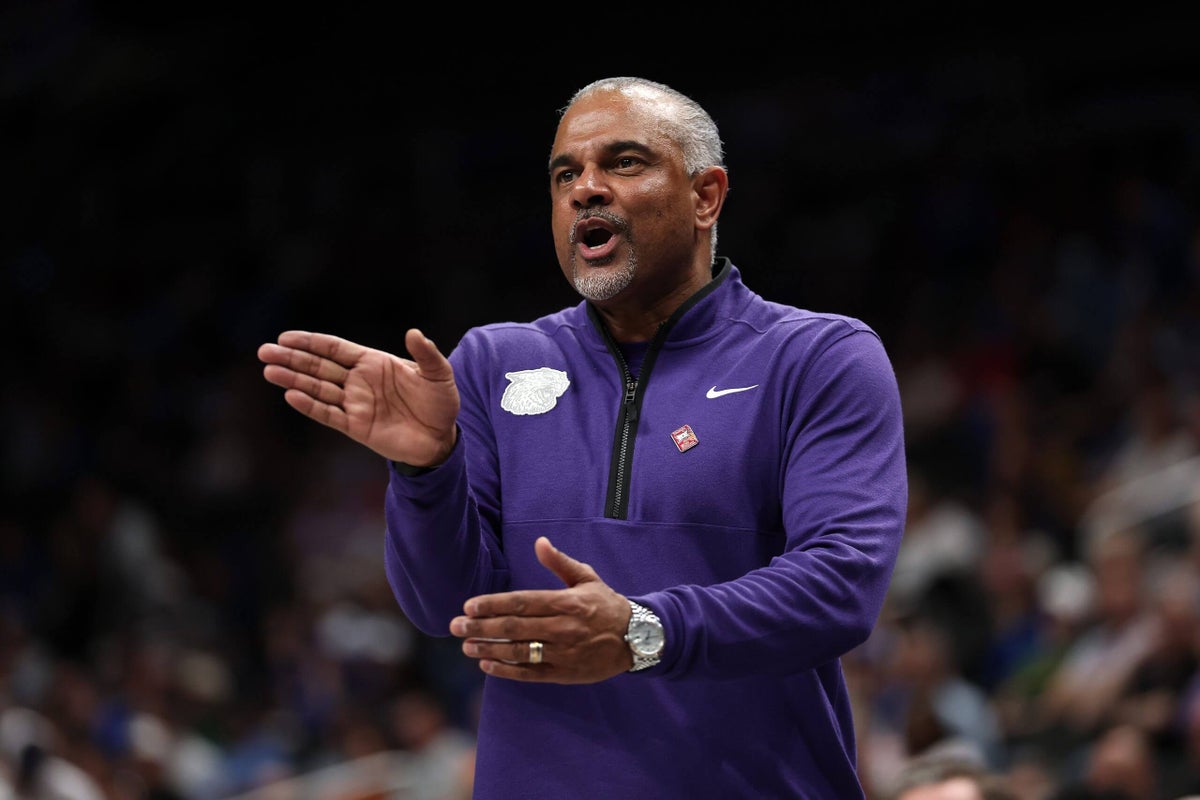
In the high-stakes world of college basketball, where multi-million dollar contracts and intense public scrutiny are the norm, the line between passionate leadership and contractual breach can be surprisingly thin. This intricate balance was thrust into the spotlight recently with the controversial firing of Jerome Tang from his position as head coach at Kansas State University. What makes this case particularly noteworthy isn't an alleged NCAA violation or a scandal involving player welfare, but rather the astonishing claim by the university that Tang's own words, uttered in a moment of post-game frustration, constituted grounds for his dismissal.
The decision by Kansas State to fire Jerome Tang for cause, thereby attempting to bypass an hefty $18.7 million buyout, has ignited a legal and ethical debate that reverberates far beyond the Wildcats' locker room. Was it merely a coach's unvarnished frustration, or did his comments genuinely cross a contractual line, "embarrassing" the university to a degree that justifies such a drastic measure? This article delves into the specifics of the Tang Kansas State saga, examining the comments, the contract clause, and the broader implications for college athletics.
The Incendiary Comments That Sparked a Controversy
The flashpoint occurred after a particularly dismal performance by the Kansas State Wildcats. Following a crushing 91-62 loss to Cincinnati, which dropped the team's Big 12 record to a dismal 1-10, Coach Tang faced the media with raw, unbridled emotion. His words, delivered with undeniable fury, left no room for ambiguity:
"These dudes do not deserve to wear this uniform. There will be very few of them in it next year. I’m embarrassed for the university, and I’m embarrassed for our fans, our student section. It is just ridiculous. We’ve got practice at 6 a.m. tomorrow morning, and we will get this thing right. I have no answer and no words. … Right now, I’m like pissed."
For many, these comments, while harsh, might be seen as the passionate outburst of a coach deeply invested in his team's performance, expressing a level of accountability often demanded by fans. Tang's background, including a lengthy and successful tenure as an assistant coach at Baylor where he helped secure a national championship, lent weight to his coaching philosophy. However, for Kansas State Athletic Director Gene Taylor, the reaction to these comments—both locally and nationally—was severe enough to trigger a different kind of action. Taylor pointed to the negative reception as a key factor in his decision, claiming the remarks potentially brought embarrassment to the university, thereby violating a clause in Tang's contract.
The "For Cause" Termination: A High-Stakes Legal Gambit
Terminating a coach "for cause" is a familiar tactic for universities looking to avoid substantial buyouts. Historically, "for cause" dismissals are typically reserved for serious infractions such as NCAA violations, ethical misconduct, or documented player mistreatment. Legal precedents abound: UConn fired Kevin Ollie for cause amid NCAA investigations; Kansas attempted to fire David Beaty for cause, alleging violations; and Tennessee sought the same with Jeremy Pruitt. In these cases, the alleged cause was rooted in tangible, often regulatory, breaches.
What makes the Tang Kansas State situation uniquely challenging is the absence of these traditional "for cause" elements. There are no allegations of NCAA rule-breaking, no lawsuits over player abuse, no ethical scandals. Instead, Kansas State is attempting a novel approach: arguing that Tang's verbal criticisms of his team, and the subsequent public reaction, constitute a contractual violation. This legal strategy, as Dallas-based lawyer Michael Lyons points out, is often employed by schools when performance dips and they need to avoid a costly buyout. Lyons, who represented Beaty and Pruitt in their respective battles, recognizes the pattern of universities attempting to "concoct a for-cause termination so that they don’t have to pay the buyout." The financial incentive for K-State is undeniable: avoiding an $18.7 million payment to Jerome Tang.
Deciphering the Contract: What Constitutes "Embarrassment"?
The crux of Kansas State's argument lies within the specific language of Jerome Tang's contract, which reportedly contains clauses pertaining to conduct that could "bring embarrassment" to the university. This is where the legal battle becomes complex and highly subjective. What one person deems "embarrassing," another might view as straightforward criticism or motivational tough love.
Key Questions in the Legal Battle:
- Specificity of the Clause: How precisely is "embarrassment" defined in Tang's contract? Is it about external perception or internal damage?
- Intent vs. Impact: Did Tang intend to embarrass the university, or was his intent to galvanize a struggling team? Does intent even matter if the outcome is deemed embarrassing?
- Common Coaching Practice: Is harsh post-game criticism an uncommon phenomenon in college sports? Many coaches use strong language; where is the line drawn between acceptable candor and a contract breach?
- Subjectivity of Public Reaction: Can a university terminate a coach based on a subjective assessment of "negative reaction from sources, both nationally and locally"?
Jerome Tang has since hired prominent lawyer Tom Mars, known for his work in high-profile college sports cases, to fight the "for cause" termination. Tang's statement expressed deep disappointment and a strong disagreement with the university's characterization of his dismissal. This indicates a fierce legal challenge ahead, likely centered on the ambiguity of the "embarrassment" clause and the established norms of coaching behavior.
The Broader Implications for College Athletics
The Jerome Tang Kansas State case has far-reaching implications for the landscape of college sports, especially in an era of rapidly evolving player dynamics and immense financial pressures:
- Coaching Candor and Freedom of Speech: If "words alone" can cost a coach their job and millions in buyout money, it could have a chilling effect on coaching candor. Coaches might become more guarded in their public statements, fearing that any blunt assessment could be weaponized against them. This could lead to a less transparent and perhaps less authentic interaction between coaches, media, and fans.
- Contract Drafting and Negotiation: This case will undoubtedly lead to a closer examination of "for cause" clauses in coaching contracts. Universities might seek to define "embarrassment" more explicitly, while coaches and their legal teams will push for clearer, more objective criteria to protect against arbitrary dismissal.
- Player-Coach Relationships in the NIL Era: With Name, Image, and Likeness (NIL) deals giving players more agency and financial power, the dynamic between coaches and athletes is shifting. A coach's public criticism of players could be viewed not just as an internal team issue, but as potentially impacting a player's NIL opportunities, adding another layer of complexity to such disputes.
- Financial Incentives for Universities: The case highlights the immense financial incentives for universities to avoid buyouts. As athletic department budgets balloon and salaries soar, institutions will continue to seek avenues to mitigate financial risk, potentially pushing the boundaries of what constitutes "for cause" termination.
For universities, the temptation to avoid an $18.7 million payout is immense. For coaches, the risk of having their passionate (or frustrated) words misinterpreted or used against them demands careful consideration of their public persona and contractual obligations. This case serves as a stark reminder that every word spoken under the glare of the media spotlight can carry a multi-million dollar price tag.
The unfolding legal battle between Jerome Tang and Kansas State University will be meticulously watched by athletic departments, coaches, and legal experts across the country. It challenges conventional understandings of "for cause" terminations and probes the subjective boundaries of what constitutes professional conduct and contractual breach. Whether Tang's passionate post-game comments ultimately cost him his job and his buyout will depend on how a court interprets a vague clause about "embarrassment," potentially setting a new precedent for the future of coaching freedom and accountability in college sports.